
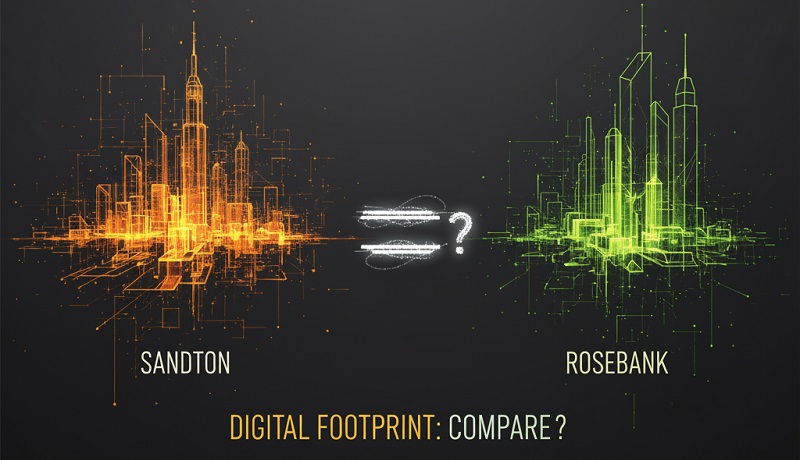
For decades, Sandton has been synonymous with “Africa’s Richest Square Mile,” establishing a towering reputation that initially defined Johannesburg’s digital and corporate landscape. However, as the urban core of Johannesburg evolves, a deeper analysis of the modern “digital footprint“—which extends beyond just fibre cables to encompass atmosphere, social presence, and contemporary business appeal—reveals a fascinating shift.
Rosebank is not merely following in Sandton’s footsteps; it is carving out a distinctly modern and arguably more vibrant digital identity.
1. The Corporate Digital Anchor: Prestige vs. Momentum
2. The Urban Digital Vibe: The 9-to-5 vs. The 24/7
The most significant difference lies in how each area feels and functions online after business hours. This dictates the nature of their social media and community digital engagement.
- Sandton’s “Sterile” Digital Echo: Sandton’s digital presence often becomes quieter, or “sterile,” after 5 PM. Its online activity tends to focus heavily on the Sandton City mall and the Convention Centre. The digital conversation is dominated by high-end commerce, finance news, and large-scale corporate announcements. Its identity is overwhelmingly commercial.
- Rosebank’s Cosmopolitan Digital Buzz: Rosebank, designed to be a 24-hour live, work, and play precinct, sustains a digital buzz late into the evening. Its social media footprint is enriched by its cosmopolitan nature, covering a diverse array of:
- Culture: Art-focused events, galleries, and “First Thursday” activations.
- Lifestyle: Discussions around its nightlife, pedestrian-friendly streets, and proximity to trendy suburbs like Parkhurst.
- Markets: Strong digital focus on its Sunday Market and other pop-up retail experiences.
Rosebank’s digital narrative is therefore richer and more organic, reflecting a diverse community rather than purely a corporate hub.

3. Infrastructure and Connectivity: Established vs. Agile
While both suburbs benefit from Johannesburg’s position as Africa’s premier data centre market, the perception of infrastructure delivery differs:
- Sandton: The infrastructure is robust, built for scale, and caters to massive data requirements. The challenge here is the over-development of office space, which, while not a digital issue, influences tenant choice and, by extension, where the next wave of high-density digital users will settle.
- Rosebank: The newer developments, such as the major corporate parks, are being built with the latest digital readiness in mind. It is considered an affluent and highly connected node. Developers in Rosebank have integrated Gautrain access and a pedestrian model, suggesting a focus on smart, compact, and highly efficient digital deployment from the ground up.
Conclusion: The Shift from Bling to Buzz
While Sandton maintains the title for sheer volume and corporate legacy, Rosebank is establishing a modern, more deeply integrated digital footprint.
The comparison is less about which area has faster internet—both affluent hubs have excellent connectivity—and more about the nature of the digital activity.
- Sandton’s Digital Footprint: The vast, high-powered digital engine of the South African economy. It’s high-value, but siloed by its corporate and retail focus.
- Rosebank’s Digital Footprint: The growing, agile digital space of Johannesburg’s next-generation urban model. It is more social, more diverse, and reflects the authentic, 24/7 rhythm of a modern city neighbourhood.
Rosebank’s current momentum in new office development and its reputation for a vibrant, walkable lifestyle suggest that its digital influence will continue to grow, challenging the long-held supremacy of Sandton in defining Johannesburg’s corporate and digital future.
AUTHOR:
Aakshat Vaishnav
Digital Marketing & SEO Expert
Discover more from Website Design Joburg
Subscribe to get the latest posts sent to your email.